Making the invisible visible
How a Mannheim-based startup is using AI to help better protect medical staff in the operating room.
Reading time: 8 Minutes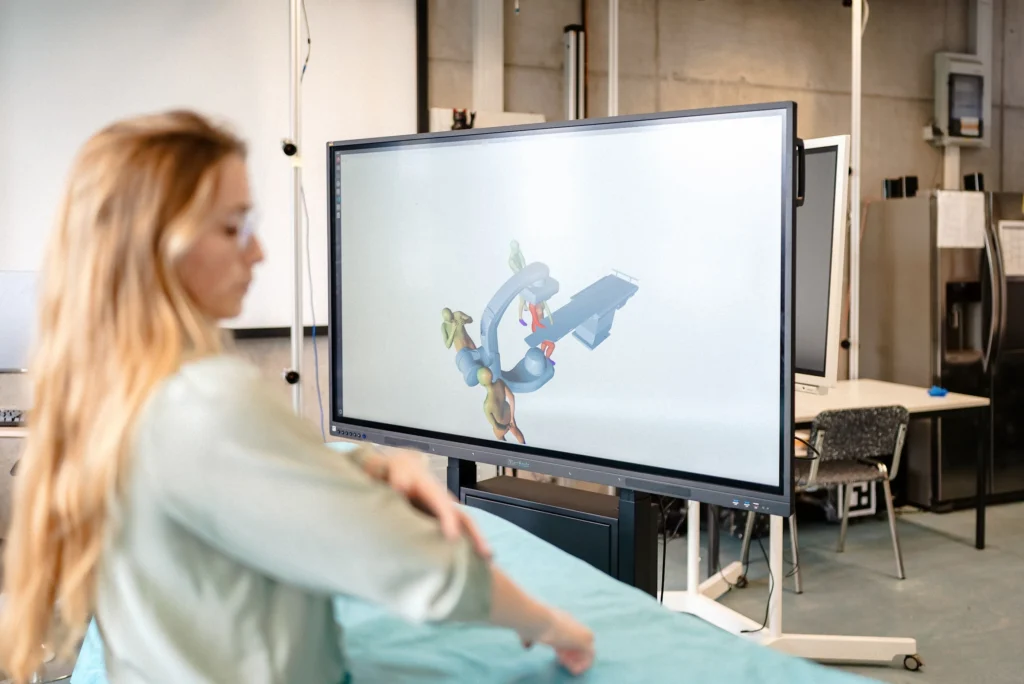
Some innovations are born in the lab. Others begin with a problem that has long been overlooked. The SAPIENTEC team has developed a technology that, for the first time, precisely visualizes the radiation exposure of medical staff during surgery. Developed at the M²OLIE research campus at Mannheim University of Applied Sciences, the startup is now receiving support on its path to market readiness through a one-million-euro EXIST research transfer grant. We met with the founders for an interview and spoke with them about their journey from research to startup, the importance of the Mannheim network, and their vision for the future.

Ralf Laubscher
First of all, congratulations! You’ve just been awarded one million euros in funding from the “EXIST Research Transfer” program. How does that feel?
Mareike Matz-Kellner
Really great! It’s fantastic to receive this EXIST Research Transfer grant. It gives us the security and the opportunity to develop our technology into a market-ready product.
Ralf Laubscher
One million euros—how long will that last? Are you already planning the next round of funding?
Mareike Matz-Kellner
The million will likely last for the next two years. During that time, we’ll focus primarily on finalizing the technology, programming, and pilot installations in hospitals. Once we move on to company formation and market entry, we’ll definitely need another round of funding.
Ralf Laubscher
With your AI-powered assistance system, AI.Dos, you make radiation visible in the operating room. How did this idea come about?
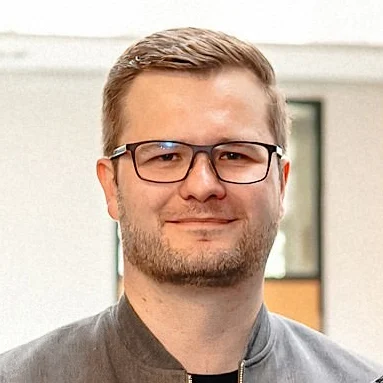
Patrick Schülein
The idea originated at the M²OLIE Research Campus, an interdisciplinary research project here in the region. Clinical staff brought to our attention the need for better radiation protection in the operating room. Studies show that the use of X-rays poses health risks—including an increased risk of cancer, cataracts, and thyroid disorders.
Although students are taught about these risks during their studies, during surgery there is practically no way to check how much radiation each individual is exposed to.
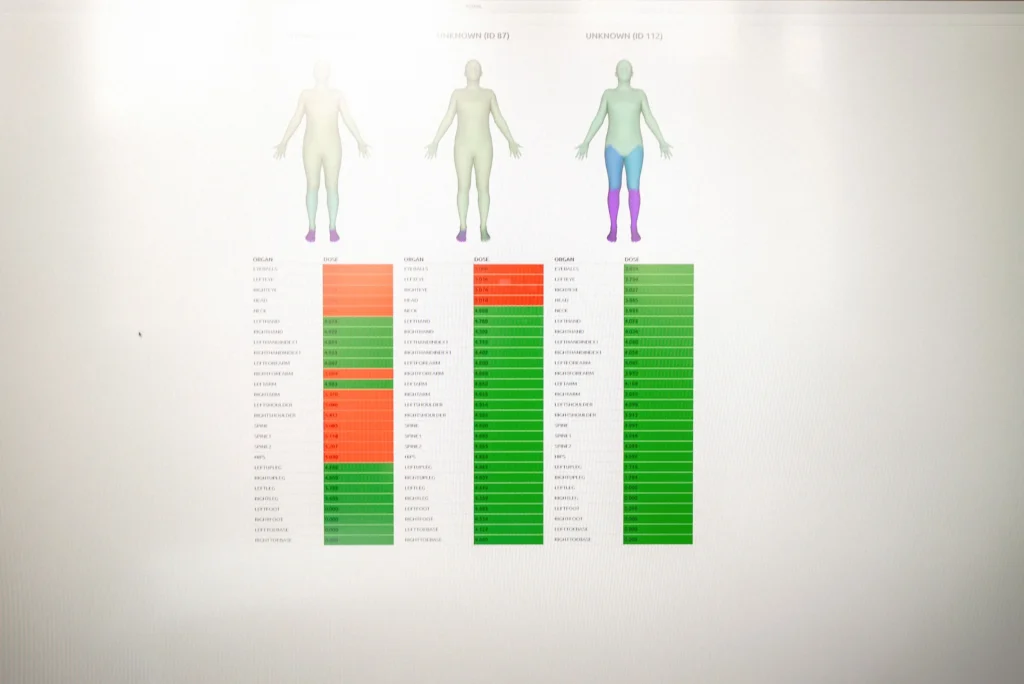
The officially mandated dosimeter is worn in the chest area under a lead apron and therefore often reads 0.0 radiation. This gives medical staff a false sense of security. After surgery, our AI.Dos assistance system shows very precisely how much radiation has actually been absorbed by the hands, eyes, or thyroid—areas that are often not protected by lead.
Ralf Laubscher
Your system combines sensing technology, real-time tracking, and AI. You developed this technology at the Mannheim University of Applied Sciences. Would that have been possible five years ago without this tech ecosystem?
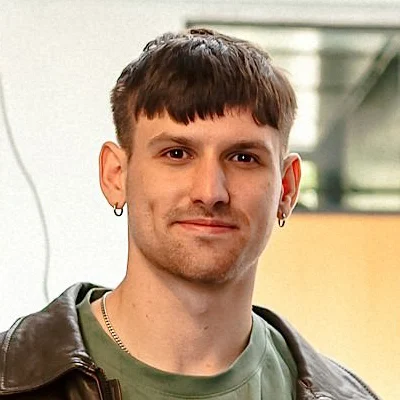
Simon Thimm
We developed the technology at the Institute for Applied Artificial Intelligence & Robotics (A²IR) at Mannheim University of Applied Sciences under the direction of Prof. Dr. Marcus Vetter, in close collaboration with Heidelberg University and clinical partners, particularly Prof. Dr. Schönberg and Prof. Dr. Diehl. It was certainly a decisive advantage for us that the university had acquired large AI servers in recent years.
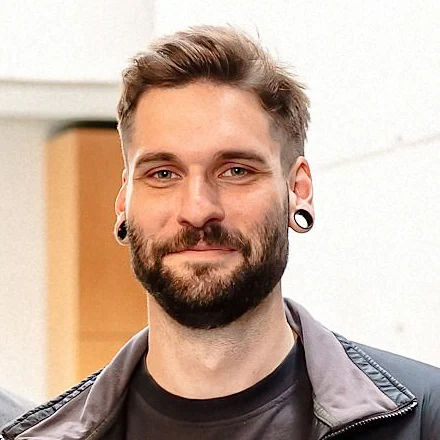
Niklas Rettig
Thanks to the increased computing power of the latest AI chips, we were able to train our networks using medical data in such a way that we can now measure radiation data in real time at high speed and with optimal spatial resolution. In addition, we offer a highly efficient method for documenting radiation data that completely replaces the previous, very complicated, and time-consuming processes.
Ralf Laubscher
Would it be fair to say that, with SAPIENTEC, you are playing a pioneering role in this field?
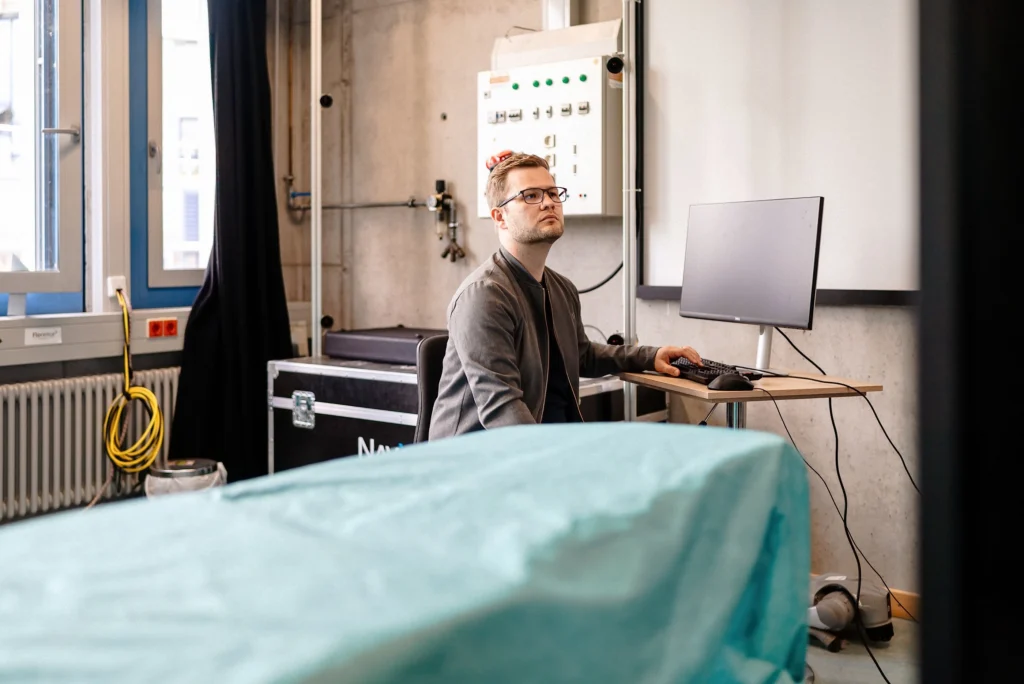
As far as we know, that’s a fair assessment. There are various research groups working on this topic, but to our knowledge, only our system currently combines the described advantages in this way.
Ralf Laubscher
When you’re trying to win over investors or hospitals, what role does the “Made in Mannheim” story play in that?
Mareike Matz-Kellner
Definitely a major and positive role. The Mannheim Medical Technology Cluster uniquely brings together hospitals, research, and industry, and—together with the Mannheim-Heidelberg Hospital Network—forms one of Germany’s most important medical hubs. This is a crucial driver of our development.
Patrick Schülein
We’re receiving an incredible amount of support here. The Mannheim Economic Development Agency welcomed us with open arms and has always connected us with the right contacts to help us take the next step. We’re also part of the Next Mannheim startup network and will soon be moving into the CUBEX ONE medtech startup center.
Ralf Laubscher
How did you end up as a team in Mannheim?
Patrick Schülein
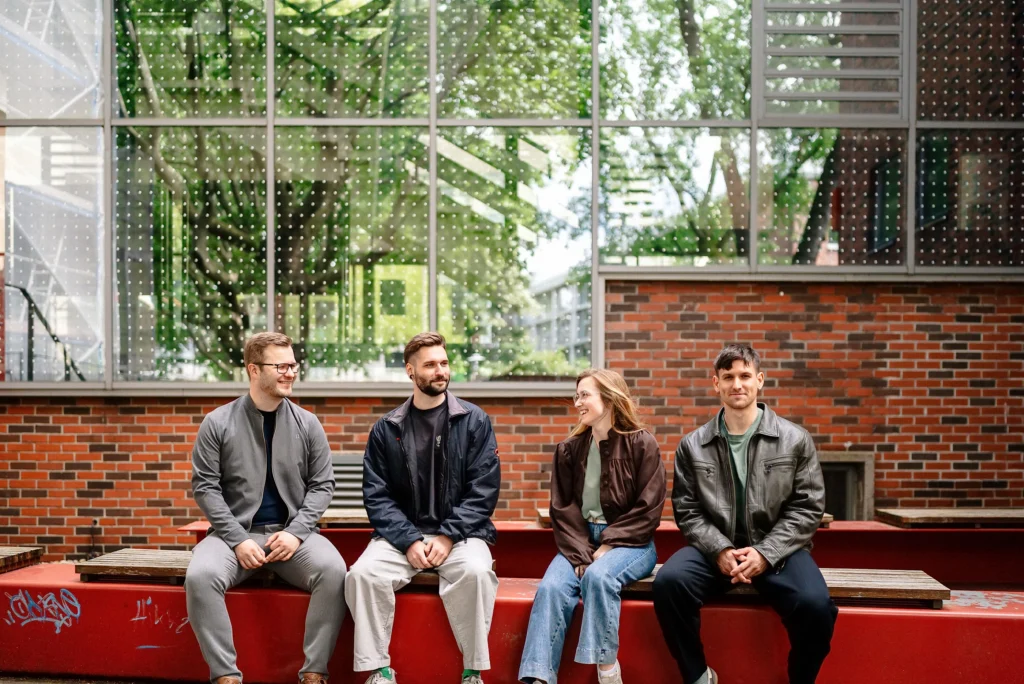
Simon, Niklas, and I met at the university. We were all involved there in various roles, working on our theses and doctoral dissertations. Since the three of us focus primarily on technology, we posted a job opening for the CEO position—and that’s how we found Mareike. She developed the market entry strategy and is now also responsible for marketing and communications.
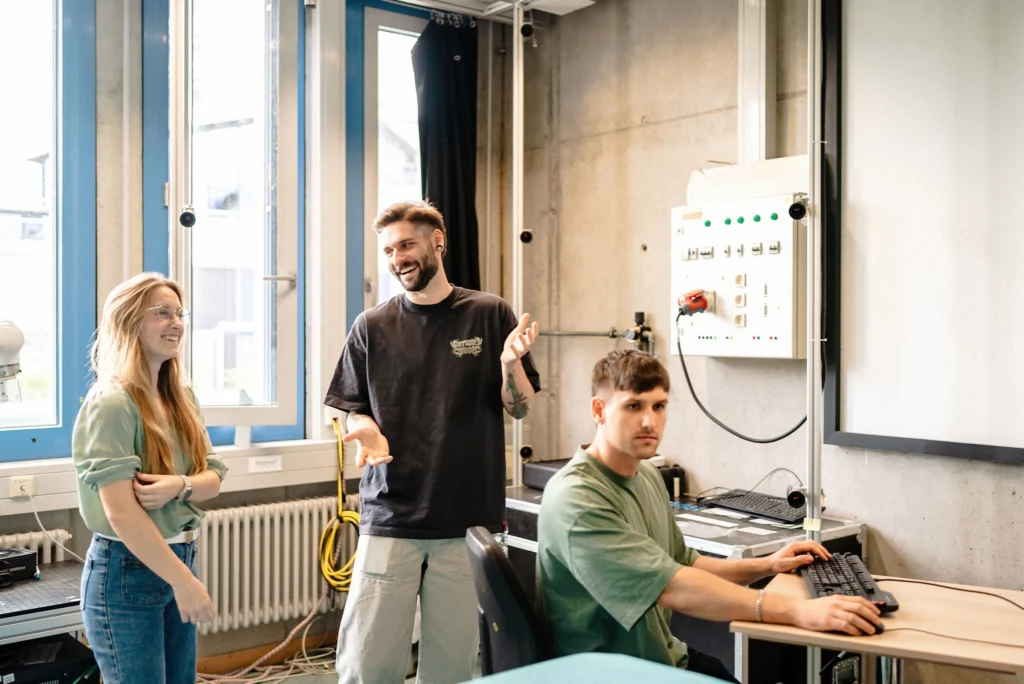
When I read the job posting, I immediately thought, “That sounds exciting.” After a phone call with Patrick, it quickly became clear: I want to be a part of this.
Ralf Laubscher
Patrick, you don’t just work in Mannheim. Do you live here, too?
Patrick Schülein
I came to Mannheim in 2010 to study medical technology. I lived in Frankfurt for a while, but today I’m very happy to have put down roots here. My aunt used to live here, so I’ve known Mannheim for a long time. I quickly built up a good circle of friends here, and I feel completely at home. I live in the Käfertal-Süd neighborhood, right next to the Federal Horticultural Show grounds.
Ralf Laubscher
Simon, what’s your Mannheim story?
Simon Thimm
My story is similar to Patrick’s. I also came to Mannheim to study medical technology. I’m originally from Bretten, and I’ve been enjoying living here for six years now. I feel very much at home here and have no plans to leave Mannheim at this time.
Ralf Laubscher
What special moment connects you to the city of Mannheim?
Simon Thimm
I come from a fairly rural area. When you move to the city, it’s naturally a different, urban way of life. What I especially appreciate about Mannheim is the diversity of people and cultural offerings. At the same time, the city remains compact and never feels too big.
Niklas Rettig
Everyone knows each other here. In neighborhoods like Neckarau, despite the extensive infrastructure and many businesses, there’s still that pleasant small-town feel—right in the middle of the city. I find that very special.
Patrick Schülein
In Frankfurt, a lot of things felt too spread out to me. I like how compact Mannheim is: whether on foot, by bike, or by tram—you can get from A to B quickly. And thanks to the ICE hub, you can reach Berlin and many other major cities in just a few hours from Mannheim Central Station. That’s really convenient.
Ralf Laubscher
When the SAPIENTEC team celebrates another milestone—where do you go to celebrate?
Mareike Matz-Kellner
We recently partied together at Hafen 49 in Jungbusch, where DJs from all over the world regularly spin. It was amazing. To be honest, it was more of a coincidence, since we were there as guests of Next Mannheim’s Future Founders Festival. It was a day full of inspiration, conversation, and that festival vibe.
Patrick Schülein
I’m not really the party type; I prefer spending time outdoors. But I’d love to celebrate our next success with the whole team at the Sieferle & Kø Bar in Jungbusch.
Ralf Laubscher
If you work hard, you need to eat well. What’s your tip for the perfect lunch break?
Simon Thimm
Our university cafeteria is actually pretty good. But there are also some great alternatives right nearby. I highly recommend the vegan restaurant Glückstein in Neckarau. My secret tip for the summer, though, is the Greek restaurant by the Stollenwörthweiher. And when I’m out and about in downtown, my favorite place to go is Ichi at the Q-Quadrat.
Ralf Laubscher
When you’re not doing research and development, where in Mannheim do you hang out in your free time? Where do you relax and recharge your batteries?
Patrick Schülein
I highly recommend bouldering. There are plenty of great spots for it in Mannheim. Plus, the lawns at the Rheinterrassen are a wonderful place to spend a relaxing afternoon with a picnic.
Simon Thimm
For anyone living in the southern part of Mannheim, Spinelli Park on the grounds of the Federal Horticultural Show is highly recommended.

Luisenpark is also a great place to unwind.
Ralf Laubscher
With this new million-dollar grant, you’re already thinking ahead—beyond medicine. What is your vision for the future?
Mareike Matz-Kellner
With the help of EXIST funding, our goal is to establish a presence in various clinics through pilot installations. We intend to continuously refine our technology in everyday clinical practice. We also see great potential internationally, as medical procedures using radiological imaging techniques are becoming increasingly important.
Looking ahead, we have additional assistance systems in development that we plan to implement following the successful rollout of AI.Dos. All of this is in line with our vision of better protecting medical staff—who help others every day—through AI-powered real-time transparency and effectively supporting them in their daily clinical work.
Ralf Laubscher
What are the reasons for SAPIENTEC to remain at the Mannheim location in the future?
Patrick Schülein
Pretty much everything. We’ve met a lot of great people and built networks here that support us and guide us along the way. We feel very at home in Mannheim and are now looking forward to the next step: moving into the CUBEX ONE startup center and successfully launching our company.