
You hardly have to leave the neighborhood
Nora Gerken wohnt erst seit Kurzem in Mannheim und spricht mit uns über ihre ersten Eindrücke, Vorurteile und ihre Arbeit beim Internationalen Filmfestival Mannheim-Heidelberg.
Reading time: 11 Minutes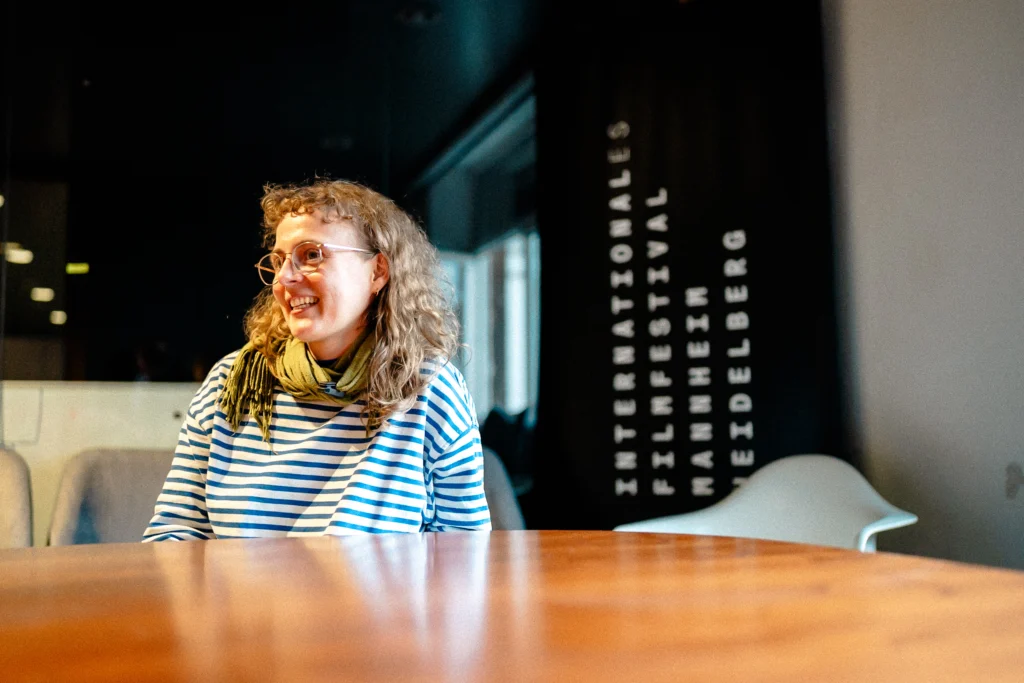
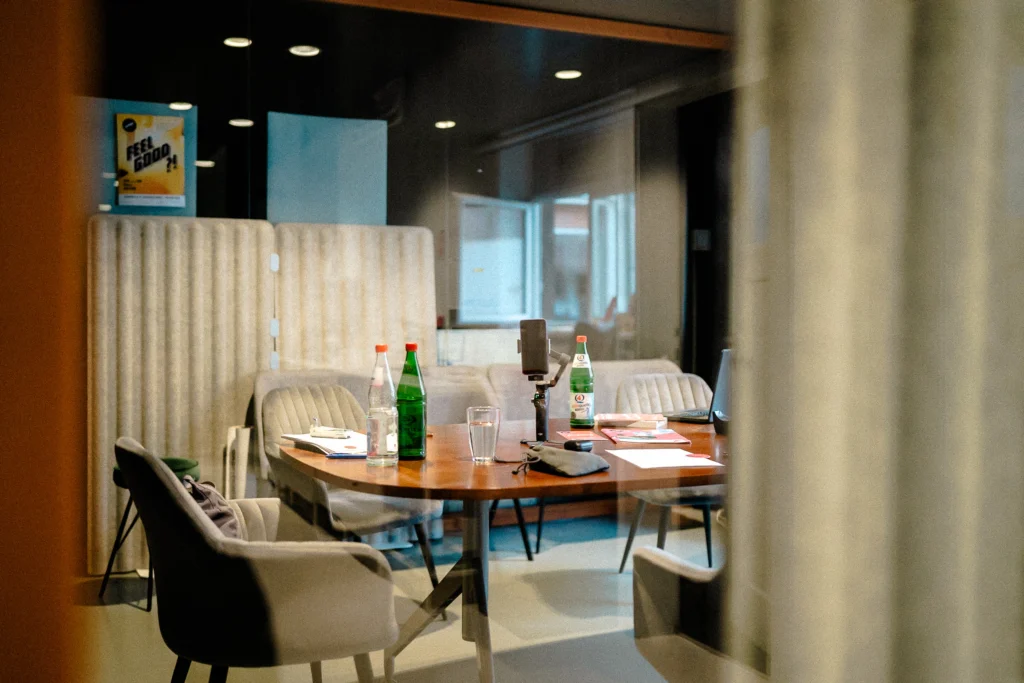
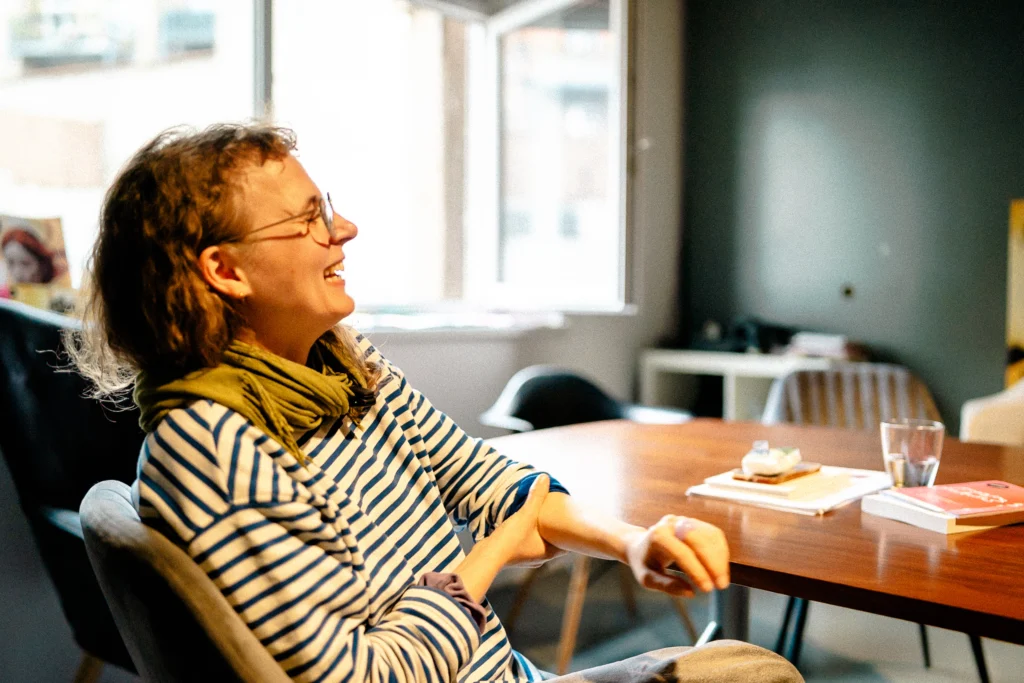
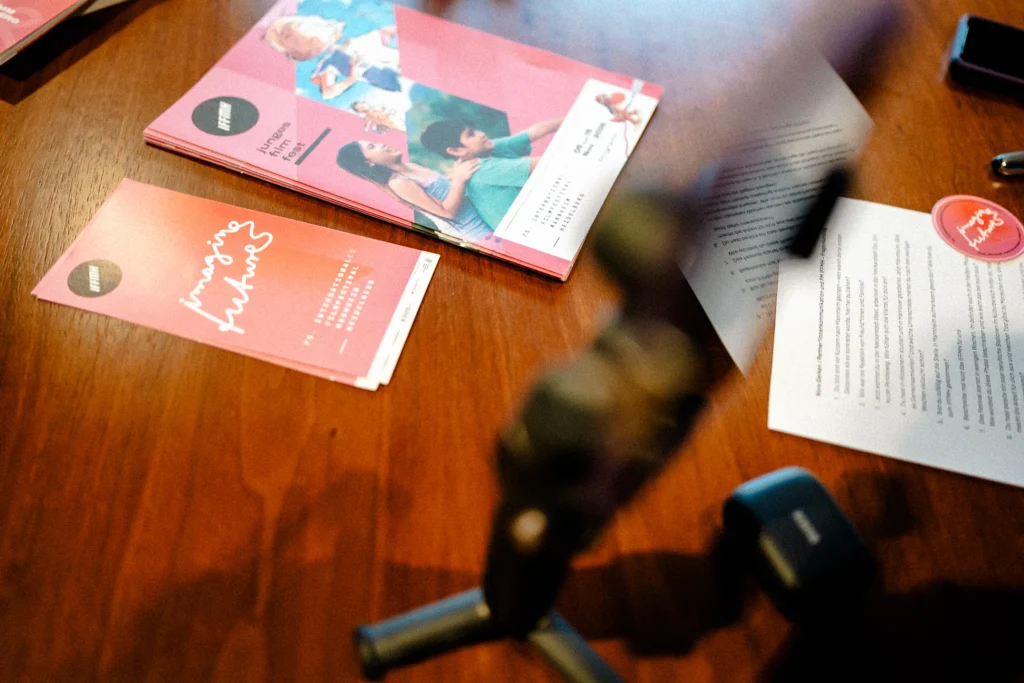
The IFFMH office is on a quiet side street in Neckarstadt-Ost. The festival is about to start, and the open-plan office is buzzing with work. Nora is already waiting for us in the festival office, where we make ourselves comfortable.
Anna Maier
Let me jump right in: you haven’t been in Mannheim for very long, have you?
Nora Gerken
That’s right. I moved to Mannheim in mid-July, and before that I lived in the Hildesheim / Hanover region for about 15 years.
Anna Maier
So you’re still very new here. What were your first thoughts when it became clear that you might be moving to Mannheim? Did you have a picture of the city? How did you find out about it?
Nora Gerken
It was a very conscious decision to move to Mannheim, partly because of the job. At the same time, it wasn’t easy to leave behind my family, friends and a strong personal network, so there was naturally some wistfulness. But after my first visit for the job interview, I already felt that Mannheim is a city that is underrated. Beforehand I had heard a lot of rather negative opinions, but when I was here myself, I thought: Hey, things are happening here! I had the feeling that there’s a lot to discover here, and I’m really looking forward to it.
Anna Maier
Did you know that from the cities you lived in before?
Nora Gerken
Yes, exactly. In my experience, both of those cities are underrated too. Many people say Hildesheim is sleepy, and Hanover is simply called boring. That doesn’t do justice to either city. I find it interesting that these labels are mostly picked up and passed on by people who may never have been there, or who maybe only changed trains at the main station, but have no real experience of these cities. My experience was completely different.
Anna Maier
So you perceived the cities very differently from the prejudices about them?
Nora Gerken
Yes! I think it simply takes time to arrive and settle in when you come to a new city, especially if you don’t really know anyone and have no points of connection. Then it’s a matter of going out again and again, approaching the city and everything new, and giving it a chance.
Anna Maier
I can totally relate! You now live in Neckarstadt-West, a district where a lot is going on. Does that help with settling in? How do you experience it?
You hardly have to leave the neighborhood, because everything is well represented around Neumarkt: from the kiosk to the supermarket, coffee, pizzeria, playground for families.
Nora Gerken
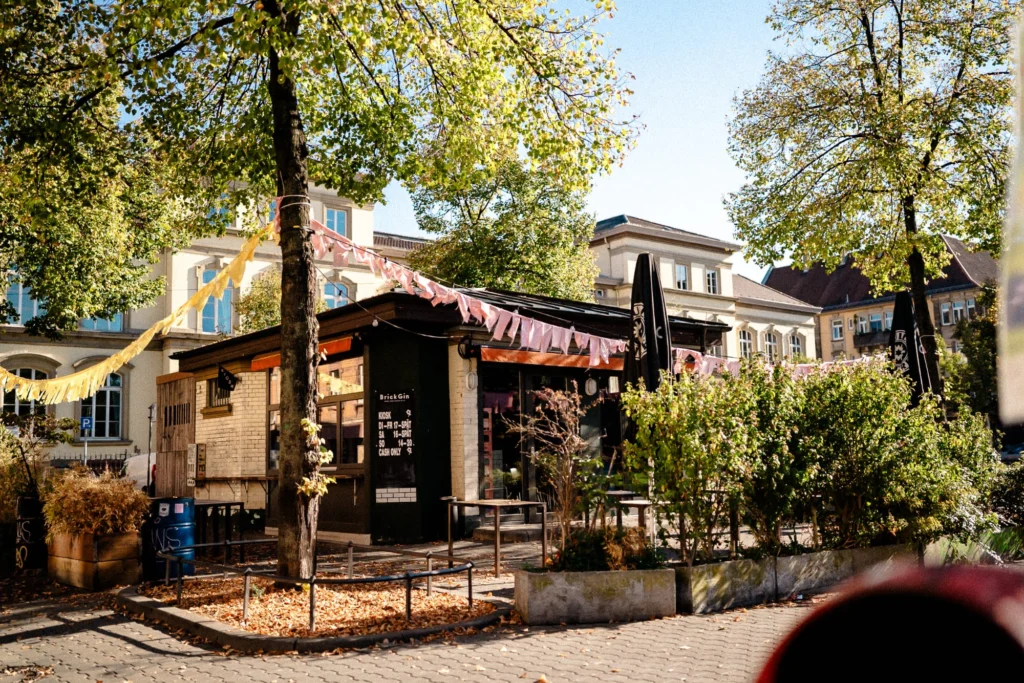
Definitely, Neckarstadt-West is very lively, and a lot happens in public space. I live at Neumarkt and have already been to the open-air cinema there, for example. There’s an incredible amount going on at and around the square. On the other side is the Neckar riverbank, where people meet, watch the sunset together, have a drink or just sit by the water. It’s really lovely.
I also feel that everything I need in daily life is right here. And it’s nice because little by little you get to know quite a few faces and people. It became familiar to me very quickly here.
Anna Maier
What you describe is very typical of Mannheim. The city has well-functioning, lively districts. Your commute is very short? Tell us about it.
Nora Gerken
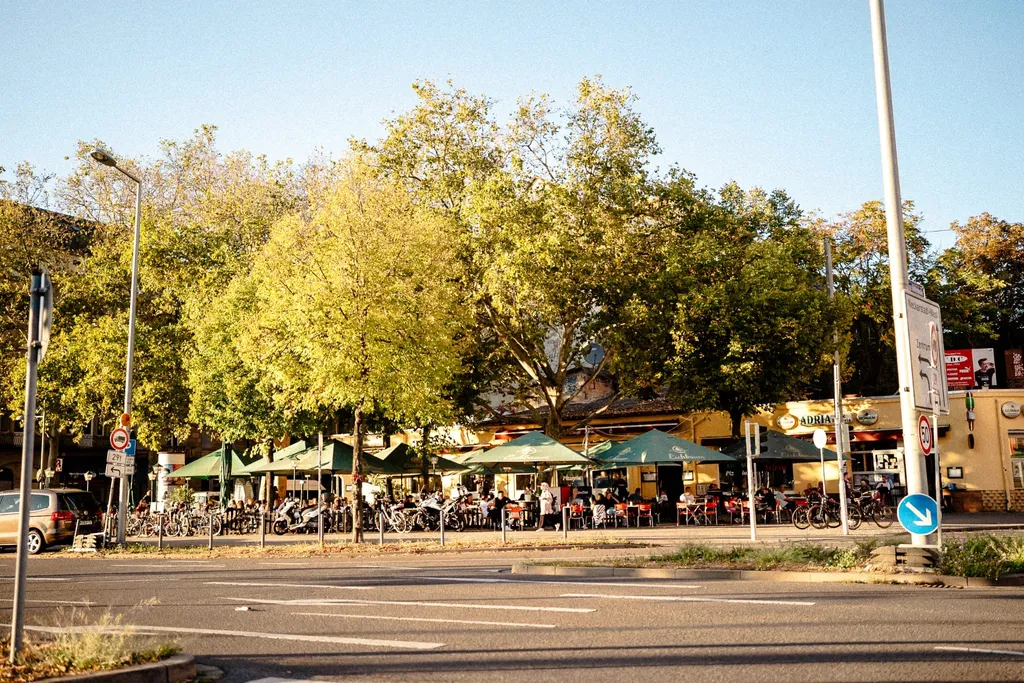
I mostly get around by bike and ride ten minutes from one district to the other, from east to west and back. It’s a huge luxury to have such a short commute.
In Mannheim I start at Neumarkt and then ride across the Alter Messplatz, where there’s always a lot going on in the morning. Parents bring their children to daycare or school, people commute to work, they stand at the Alte Feuerwache, and children walk to school or are taken there. On my way I always pass Café Adria. I feel it’s a central place that somehow connects these districts. It’s full morning, noon and night with all kinds of people. I like riding past there, and by now I can even wave to a few people here and there. These are lively places that I notice on my daily route, and I really appreciate that. Mannheim feels very urban, different from Hanover, but also lovely in that way.
Anna Maier
Do these everyday encounters and routes help you get to know the city?
Nora Gerken
I have to say, I really have a soft spot for everyday routes. Through them I connect with the city to a certain extent. With Neckarstadt-Ost and -West, that already works quite well for me. These are routes I really like.
Anna Maier
You lived in Hildesheim and Hanover for a very long time, where you studied and worked. Now Mannheim. Are there similarities or big differences? Can you say anything about that yet?
Nora Gerken
Hildesheim and Hanover are both very green cities. Within a quarter of an hour by bike, you can be out in nature. I experience that differently here in Mannheim. I’d describe the Neckar riverbank as a more or less green place. But the surroundings of Mannheim are much more urban and city-like. On the riverbank you also see industry. It’s a completely different metropolitan area. But you can still get out into nature from Mannheim, you just have to go a bit further. It takes me half an hour by bike to get to the Käfertaler Wald.
What connects the cities are these public squares where a lot happens, where people meet and initiatives organize events. In Mannheim, for me so far, those are places like Neumarkt, the Neckar riverbank, the Adria and the Jungbusch.
Anna Maier
Moving to another city often comes with a lot of uncertainty. If you become aware of this mix of the familiar and the new, maybe the leap into another city isn’t so bad after all?
Nora Gerken
You’re definitely not lost if you’ve already navigated a city before or lived in a bigger city.
Anna Maier
You were job hunting and then came to Mannheim. Was that a conscious decision? Did you know the film festival was here?
Nora Gerken
In Hanover I worked at a foundation and had a really great job. But at some point I felt like doing something new and wanted to work more in arts and culture again and move into project work. So I researched for quite a while, searching specifically further south, because important friends of mine live here too.
At some point I stumbled across the job posting for the Internationales Filmfestival Mannheim-Heidelberg in the alumni newsletter of my old university, the University of Hildesheim. Then I looked up Mannheim on Google Maps and thought it could be a good fit. After I sent off an application, a few weeks later I was on the ICE to Mannheim. I took the time to have a look at the city then.
Anna Maier
You arrived by train, and then? What did you do to get an impression of Mannheim?
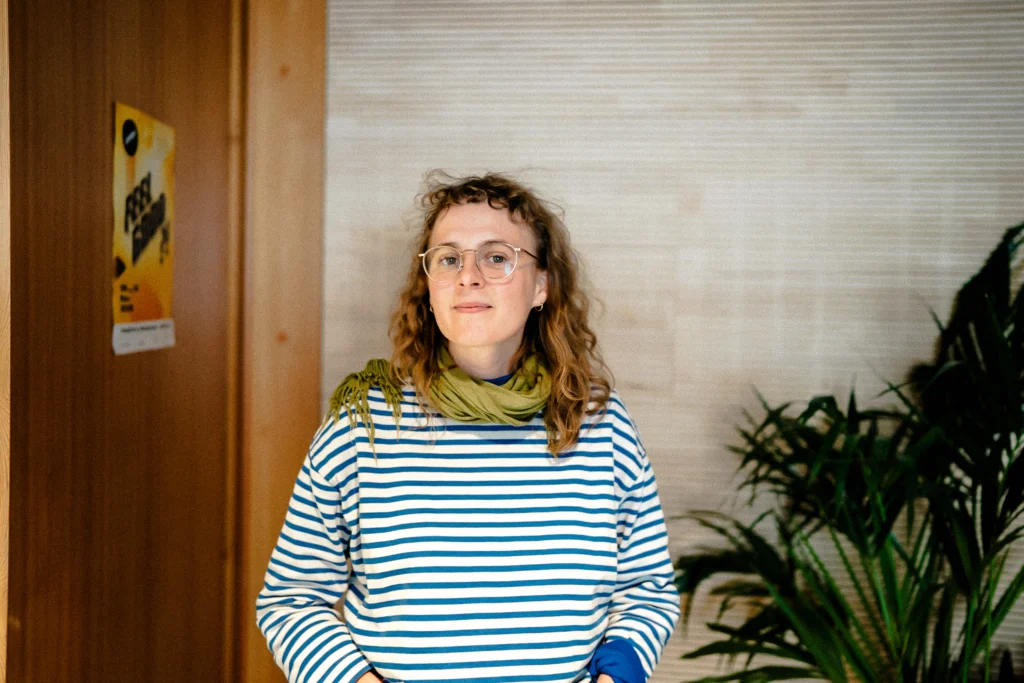
By chance I ended up in Neckarstadt-West. I didn’t know that I would later live there. I strolled along the Neckar riverbank and wandered through the streets, then sat down in a café and let the city sink in a little. That was good.
Anna Maier
Now you’ve arrived at the film festival. Can you explain it briefly for us?
Nora Gerken
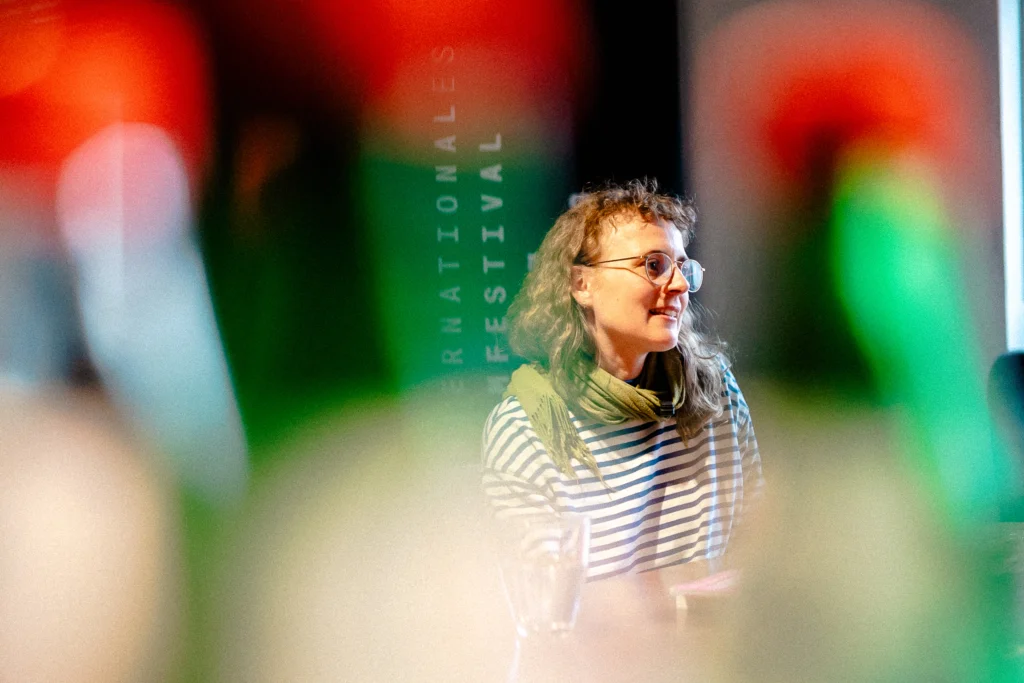
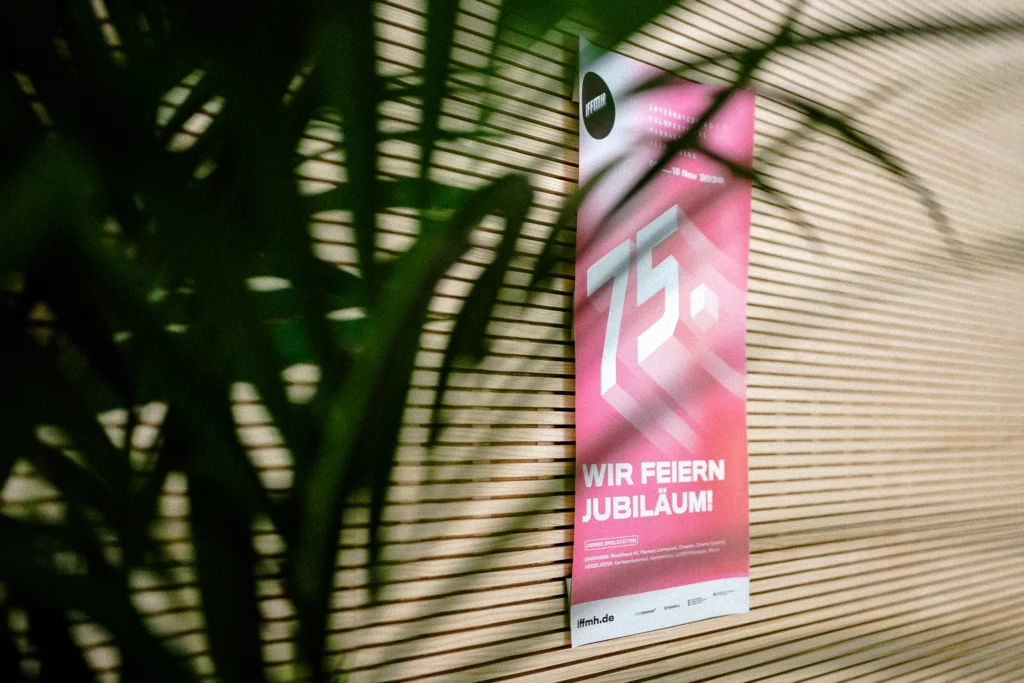
The Internationales Filmfestival Mannheim-Heidelberg (IFFMH) brings international film to Mannheim and Heidelberg and discovers new film and directing talent. This year the program features more than 80 films from 50 countries. The festival has existed since 1952, which makes the IFFMH the second most traditional film festival in Germany after the Berlinale. It takes place from November 5 to 15 in Mannheim and Heidelberg. Alongside the film program, there will again be an interesting supporting program. You can find the details on our website. Together we’re celebrating our 75th anniversary under the motto “Imagine Futures!”
Anna Maier
It’s October and the festival takes place in November. So you’re in the hot phase.
Nora Gerken
Yes! It’s a very intense working phase right now.
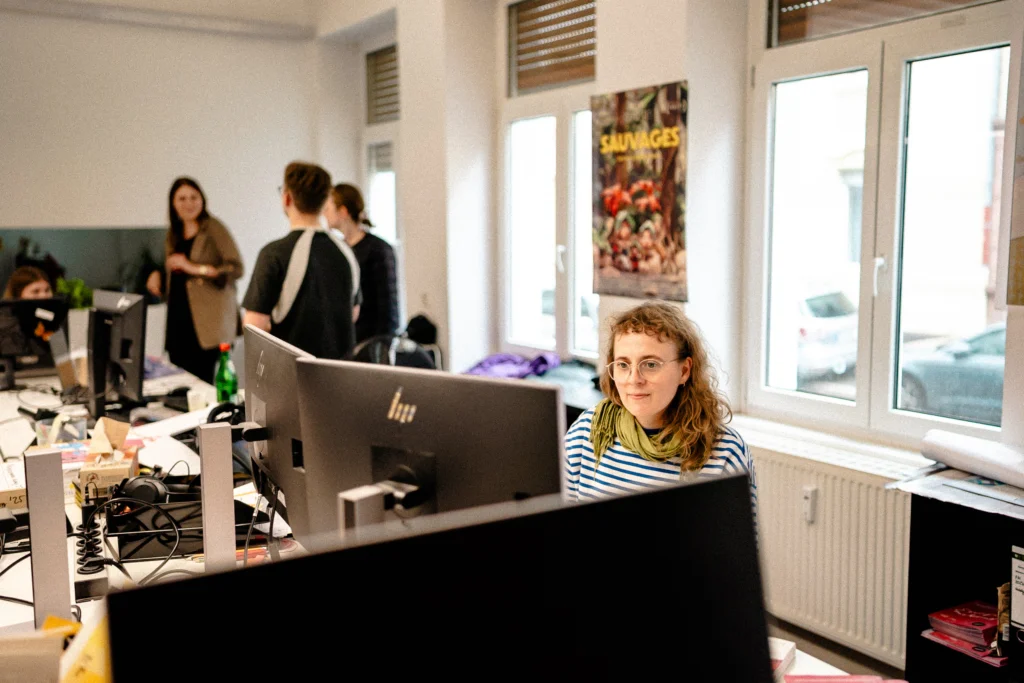
We all work in our different areas. Shortly before the festival the team grows again, as interns and other crew members join. Preparations are in full swing. At this stage we’re in a lot of meetings and external appointments, working in Excel spreadsheets and our to-do lists, and we’re very busy putting together a wonderful anniversary edition. Working in the team is really fun and I’m very much looking forward to the festival!
Anna Maier
You’ve worked in the cultural sector before. What does working in this field mean to you? And what advice would you give to people who are also interested in working in culture?
Nora Gerken
I think the nice thing about the cultural and events sector is that you’re not just putting on events. You get to engage with an art form, in my case film, and with social issues, and that keeps you very close to the audience. I really value that. It always takes creative solutions for problems that arise at short notice. For anyone interested, I’d highly recommend staying curious, following your own interests, trying things out and networking. Networks can be very important and very supportive in the cultural sector, starting with training, through university, internships or all kinds of different jobs. A film festival like the IFFMH is also always looking for crew members, interns and volunteers to help out during the festival phase.
Anna Maier
Speaking of which, we can’t only talk about work. Over the coming weeks, work will probably keep increasing and the working days may get longer. But what do you actually do in your free time? Have you already discovered something for yourself in Mannheim?
Nora Gerken
I love being active in nature. I’ve already been to the Käfertaler Wald, and I also tried a really lovely hike from Eberbach into the Odenwald to a campsite.
I really enjoyed that. At the moment, though, I’m also out and about a lot in the region as part of our cultural program for our 75th anniversary. For that, we’ve won many cooperation partners from the cultural and social sectors. Through that, I’m also getting to know the cultural institutions and the beautiful and interesting places in Mannheim and the region.
At this point, of course, my recommendation to take another look at the program and take part. There are many events that are also free of charge.
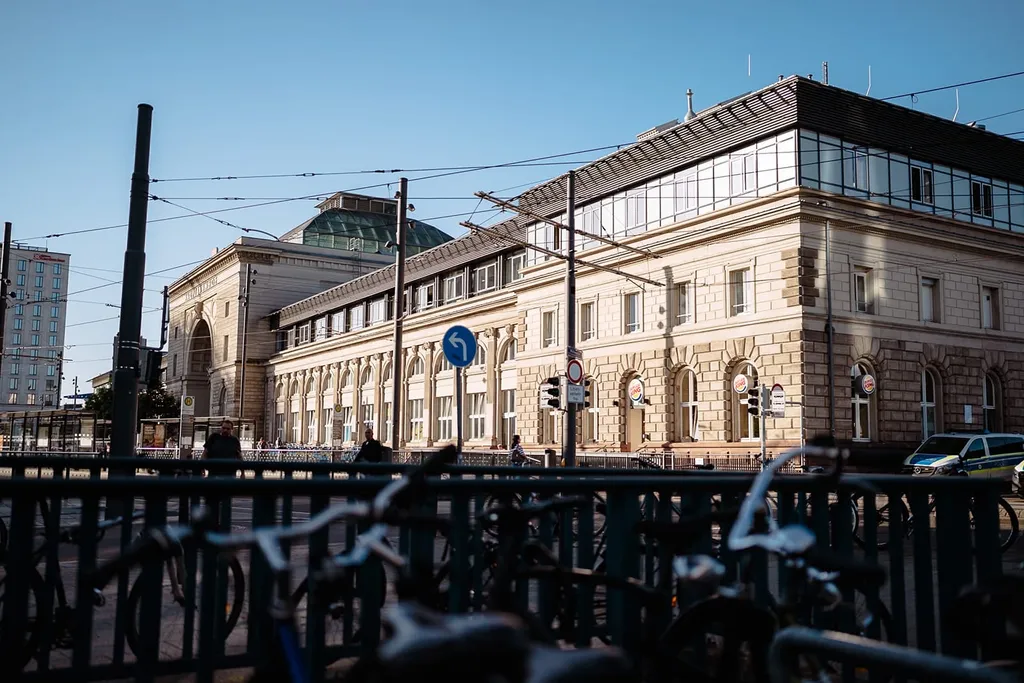
Mannheim is a hub in the rail network. In three hours you can be in Switzerland or the Benelux countries, and France is very quick to reach. You have two low mountain ranges on your doorstep, plus direct connections to capitals and major cities such as Berlin, Hamburg and Paris.
Anna Maier
Was the location of a city like Mannheim, or of Mannheim specifically, also a factor you took into account? After all, you may want to visit your family back home from time to time.
Nora Gerken
Yes, very much. It was important to me to be on the north-south line, between Freiburg and Hamburg, because that connects me with my friends and family.
And it was actually also important to me to have a direct connection to Berlin. After I came here for the job interview, I checked the location, and Mannheim happened to offer all of that.
Since I’ve been here, I’ve already been to a museum in Basel a few times. These are all new contexts that Mannheim makes possible for me as a hub and starting point.
Anna Maier
We touched on this earlier: moving to a new city also brings uncertainty. Do you have a tip for what helps with settling in?
Nora Gerken
I moved into a shared apartment, which is of course practical. But you can also look around and see what’s going on in the neighborhood. Which initiatives or events are there? Where do your own interests lie and where can you connect, where’s the nearest climbing gym, bouldering gym, swimming club and so on? Or public places, like Neumarkt, where people meet, where others are around, where you can sit down and have a coffee together.
Anna Maier
Finally: your very personal tip for the festival?
Nora Gerken
I’d like to recommend something from the supporting program. Besides the film program, there are also panel discussions, among other things. On Saturday, November 14 at 6 p.m. at Cinema Quadrat, there’s a really great panel on the topic “Future of German Film.” The panel takes place in cooperation with the Lichter Filmfest Frankfurt International and features Eva Tropisch and Constanze Klaue. Sophia Schiller will moderate, and the two panelists will discuss what has stood the test of time, possible opportunities and possible changes in German film. It’s an exciting lineup and I think it will be a great evening. I can also highly recommend the silent film concert Nosferatu. It takes place on November 7 at 7:30 p.m. at the OPAL, together with the Nationaltheater orchestra.
Thank you, dear Nora, and thank you to the Internationales Filmfestival Mannheim Heidelberg for the lovely conversation and the cozy atmosphere, despite the festival start just around the corner!